
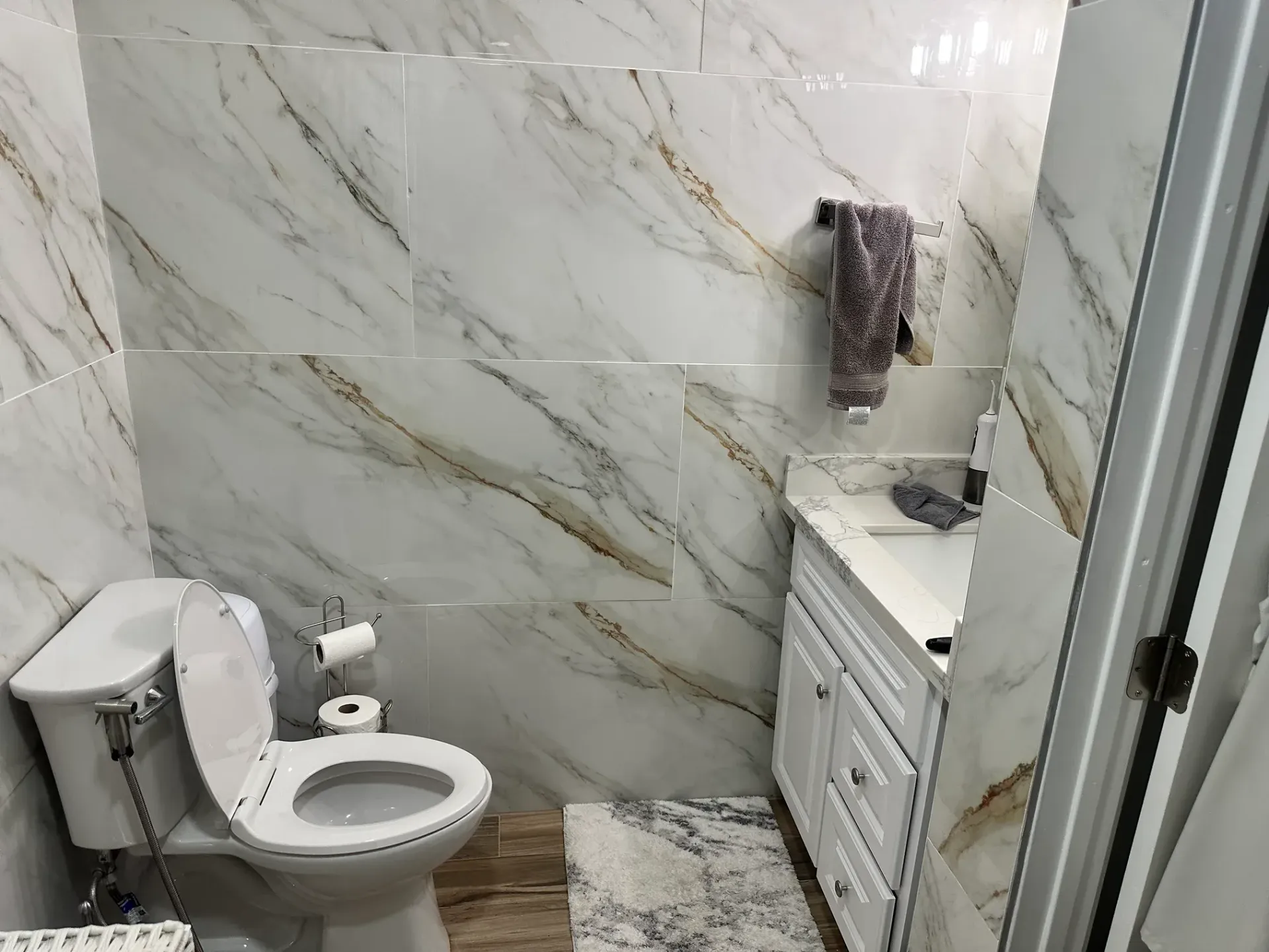
Bathrooms That Handle Moisture and Daily Use
Bathroom Remodeling in Sacramento for spaces with outdated fixtures, limited storage, or moisture damage
Grout lines that develop black mold staining reveal inadequate waterproofing beneath tile surfaces, while vanities with particle board construction swell and delaminate when exposed to humidity from daily showers. Bathroom remodeling addresses these failure patterns by installing moisture-resistant backer board before tiling, applying waterproof membranes across shower floors and walls, and selecting vanity materials that tolerate steam exposure without deteriorating. Valley Construction and Renovation coordinates bathroom renovations in Sacramento, Folsom, Elk Grove, and surrounding areas for homeowners whose existing spaces show water damage, lack functional storage, or contain fixtures from decades-old installations that no longer meet current expectations for comfort and style.
Bathroom projects involve demolition that exposes hidden plumbing issues, subfloor replacement in areas where leaks caused wood rot, and careful sequencing so that waterproofing cures fully before tile installation begins. Walk-in showers require sloped mortar beds that direct water toward drains without pooling, while alcove tubs need proper flange integration with wall assemblies to prevent moisture migration into framing cavities.
Request an evaluation to identify current moisture concerns and discuss fixture layouts that improve storage without crowding movement space.
What Changes After Professional Bathroom Installation
Professional bathroom remodeling uses RedGard or similar liquid membranes on shower walls, Schluter or Kerdi waterproof underlayment on floors, and proper sloping—minimum quarter-inch per foot—so water moves toward drains instead of settling in corners where it eventually seeps through grout. Vanity installation includes shimming cabinets level even on uneven floors so that doors swing properly and drawers glide without binding. Exhaust fans sized to room volume—typically eighty cubic feet per minute for standard bathrooms—remove moisture fast enough to prevent condensation buildup that leads to mildew growth on ceilings.
You'll notice that shower doors seal completely without gaps at the bottom, preventing water from escaping onto bathroom floors. Tile surfaces remain level underfoot without edges that catch toes, faucet handles turn smoothly without the grinding feel that indicates worn cartridges, and mirrors mount flush against walls without the slight tilt that previously distorted reflections. Grout lines stay clean longer because proper sealing prevents moisture absorption that feeds mold growth.
Bathroom remodeling covers vanity installation, tile work, shower renovations including glass door mounting, fixture replacement, and lighting upgrades. Services do not include structural modifications to expand bathroom footprints, plumbing relocation requiring slab penetration in single-story homes, or HVAC addition for heated floors unless existing systems have capacity.
Questions Before Starting Your Bathroom Project
Bathroom renovation questions typically address waterproofing practices, material durability, and how long spaces remain unusable during construction.
What makes walk-in showers different from tub installations?
Walk-in showers require more extensive waterproofing since the entire floor becomes a wet area, and they need larger drains—typically two-inch rather than standard one-and-a-half-inch—to handle water volume without backup during use.
How does Sacramento's hard water affect fixture choices?
Mineral deposits accumulate faster on chrome and polished finishes compared to brushed nickel or oil-rubbed bronze, requiring more frequent cleaning to prevent the white buildup that eventually etches surfaces if left untreated.
Why do tile selections matter beyond appearance?
Porcelain tile rated for floor use resists cracking under point loads better than wall-grade ceramic, while smaller mosaic tiles on shower floors provide more grout lines that improve slip resistance compared to large-format tiles with fewer texture breaks.
What preparation happens before demolition starts?
We protect hallway flooring with ram board, seal doorways with plastic barriers to contain dust, and shut off water supply at fixture valves rather than main lines so the rest of the home retains water access during construction.
When can the bathroom be used after installation finishes?
Grout and caulk require twenty-four to seventy-two hours to cure before water exposure, meaning fixtures are operational but showers should wait at least two days after final tile work completes to prevent premature sealant failure.
Valley Construction and Renovation handles bathroom projects with attention to waterproofing details that prevent future moisture problems. Contact us to review your bathroom's current condition and explore fixture and tile options that balance style with long-term durability.